
Top Local Business Marketing Strategies to Boost Growth


Thriving in Your Backyard: Why Local Marketing Matters More Than Ever
In a highly connected world, the battle for customers is often won right on your home turf. For small and medium-sized businesses, connecting with the community isn't just a feel-good tactic; it's a critical growth engine that turns neighborhood residents into loyal patrons. The right local business marketing strategies bridge the gap between your digital presence and your physical location, converting nearby searches into tangible foot traffic and sales. Forget abstract theories and generic advice. This guide cuts through the noise to deliver ten potent, actionable strategies designed to help you dominate your local market.
- Local marketing strategies like Google Business Profile optimization and local SEO are essential for small business growth.
- Community partnerships, hyperlocal content, and review management build trust and visibility in your area.
- Combining organic local tactics with targeted paid ads creates a reliable customer acquisition engine.
We will move beyond the basics to provide specific implementation details and practical examples you can use immediately. You will learn how to transform your Google Business Profile into a customer magnet, build unshakeable community partnerships, and leverage hyperlocal content to become a cornerstone of your local economy. This is not just a list; it is a clear roadmap. Each point is structured to give you a brief description of the strategy, a clear use case, and a specific implementation tip. Let’s dive in and turn your local presence into your greatest competitive advantage.
1. Google Business Profile Optimization
One of the most powerful and non-negotiable local business marketing strategies is optimizing your Google Business Profile (GBP). This free tool from Google is your digital storefront, allowing you to manage how your business appears on Google Search and Maps. When a potential customer searches for "plumber near me" or "best coffee in El Dorado Hills," a well-optimized GBP is what helps your business show up prominently in the valuable "Local Pack" map results.
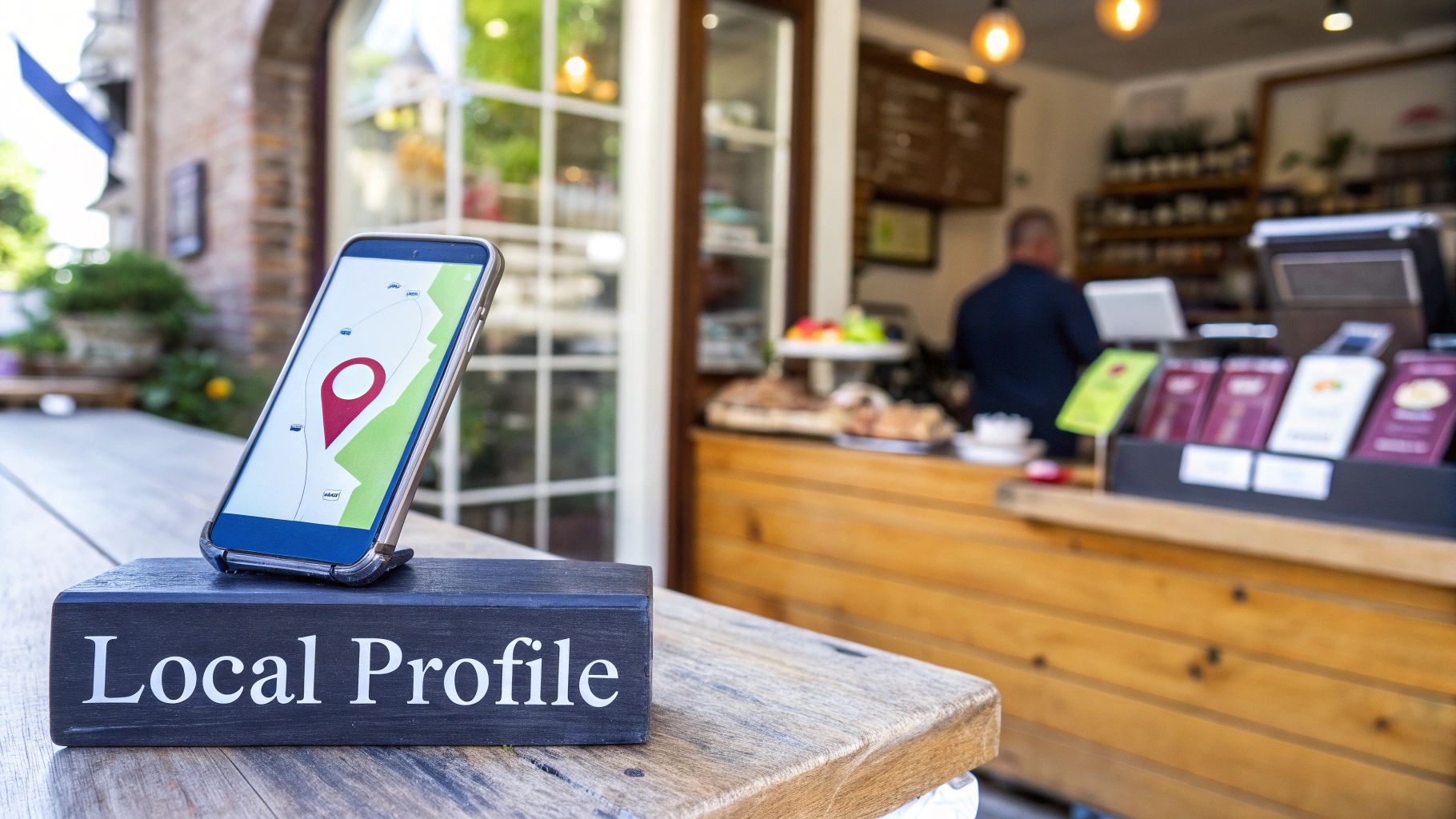
It’s the foundation of local SEO. A complete and active profile builds trust and provides customers with immediate access to crucial information like your hours, address, phone number, and customer reviews. For instance, a local Sacramento restaurant can use GBP to display its menu, reservation links, and even real-time popular times, directly influencing a customer's decision to visit.
Key Implementation Steps
To maximize your local visibility, focus on these actionable steps:
- Complete Every Section: Fill out 100% of your profile. This includes services, attributes (like "women-led" or "wheelchair accessible"), and a detailed business description.
- Leverage Visuals: Consistently upload high-quality photos of your location, products, and team. Businesses with photos receive significantly more requests for directions and clicks to their websites.
- Engage with Customers: Respond promptly to all reviews (both positive and negative) and answer questions in the Q&A section. This shows Google and customers that you are an active, engaged business.
- Post Regularly: Use Google Posts to share updates, events, special offers, and new products. These posts appear directly on your profile and signal to Google that your information is current. For a more detailed walkthrough, you can find a comprehensive guide on how to optimize your Google Business Profile on siteigniters.com.
2. Local SEO and Citation Building
Beyond your Google profile, a broader local SEO and citation building strategy is essential for dominating local search results. This process focuses on optimizing your website and building consistent business listings across the web to signal your geographic relevance to search engines. When a customer searches for "emergency AC repair in Sacramento," a strong local SEO foundation helps your business rank above competitors.
This strategy solidifies your digital footprint. Citations are mentions of your business's Name, Address, and Phone number (NAP) on other websites like Yelp, Bing Maps, and industry-specific directories. The more consistent and authoritative these citations are, the more search engines trust that your business is a legitimate local entity, boosting your rankings and making you a top choice for customers.
Key Implementation Steps
To effectively improve your local search rankings, concentrate on these core actions:
- Ensure NAP Consistency: Your Name, Address, and Phone number must be identical across every single online directory and listing. Even minor variations like "St." vs. "Street" can confuse search engines and dilute your authority.
- Build Foundational Citations: Start by securing listings on major platforms like Apple Maps, Yelp, Facebook, and Bing Places. Then, move on to respected industry-specific directories relevant to your business.
- Create Location-Specific Content: Develop pages on your website dedicated to the specific cities or neighborhoods you serve. A local El Dorado Hills dental practice, for example, could create service pages like "Cosmetic Dentistry in El Dorado Hills" to capture highly relevant search traffic.
- Audit and Clean Up Listings: Regularly use a tool like BrightLocal or Moz Local to find, correct, and remove inaccurate or duplicate citations. A clean citation profile is a critical component of effective local business marketing strategies.
3. Social Media Marketing with Local Focus
Beyond just having a presence, effective local business marketing strategies involve using social media platforms like Facebook, Instagram, and TikTok to actively engage with your community. This approach is about more than just posting updates; it's about building a digital neighborhood hub where you can connect with nearby customers, build brand loyalty, and drive real-world foot traffic through hyper-local content and interaction.
This strategy humanizes your brand and transforms it from a generic business into a familiar local fixture. For example, a local gym in El Dorado Hills can post member transformation stories and class schedules on Instagram, while a Sacramento pizza restaurant can run geo-targeted Facebook ads for a weekend special. These actions create a direct, relevant connection that national brands can't replicate.
Key Implementation Steps
To turn your social media into a local customer magnet, concentrate on these specific actions:
- Utilize Local Targeting: Use local hashtags like
#SacramentoEatsor#ShopElDoradoHillsand tag your location in every post. When running ads, set a tight geographic radius (e.g., 5-10 miles) to ensure you are only reaching potential customers. - Showcase Community Involvement: Create content that highlights your connection to the area. Share photos from a local charity event you sponsored, feature a loyal customer (with their permission), or collaborate with a neighboring non-competing business.
- Engage Actively and Promptly: Don't just post and ghost. Respond to comments and messages quickly to show you're attentive. Run location-based contests or giveaways that encourage user-generated content, such as asking followers to tag your business in their photos.
- Leverage Platform-Specific Features: Use Facebook Events to promote in-store workshops or sales. Create short-form videos on Instagram Reels or TikTok showcasing daily specials, behind-the-scenes moments, or helpful tips related to your industry. For a deeper dive into creating a powerful social media presence, you can explore the social media services on siteigniters.com.
4. Review Management and Reputation Marketing
Another crucial pillar among local business marketing strategies is proactive review management and reputation marketing. This involves actively soliciting, monitoring, and responding to online customer reviews on platforms like Google, Yelp, and Facebook. It goes beyond simple customer service; it's about leveraging positive social proof as a powerful marketing asset to build trust and directly influence buying decisions. In today's digital landscape, reviews are the new word-of-mouth.
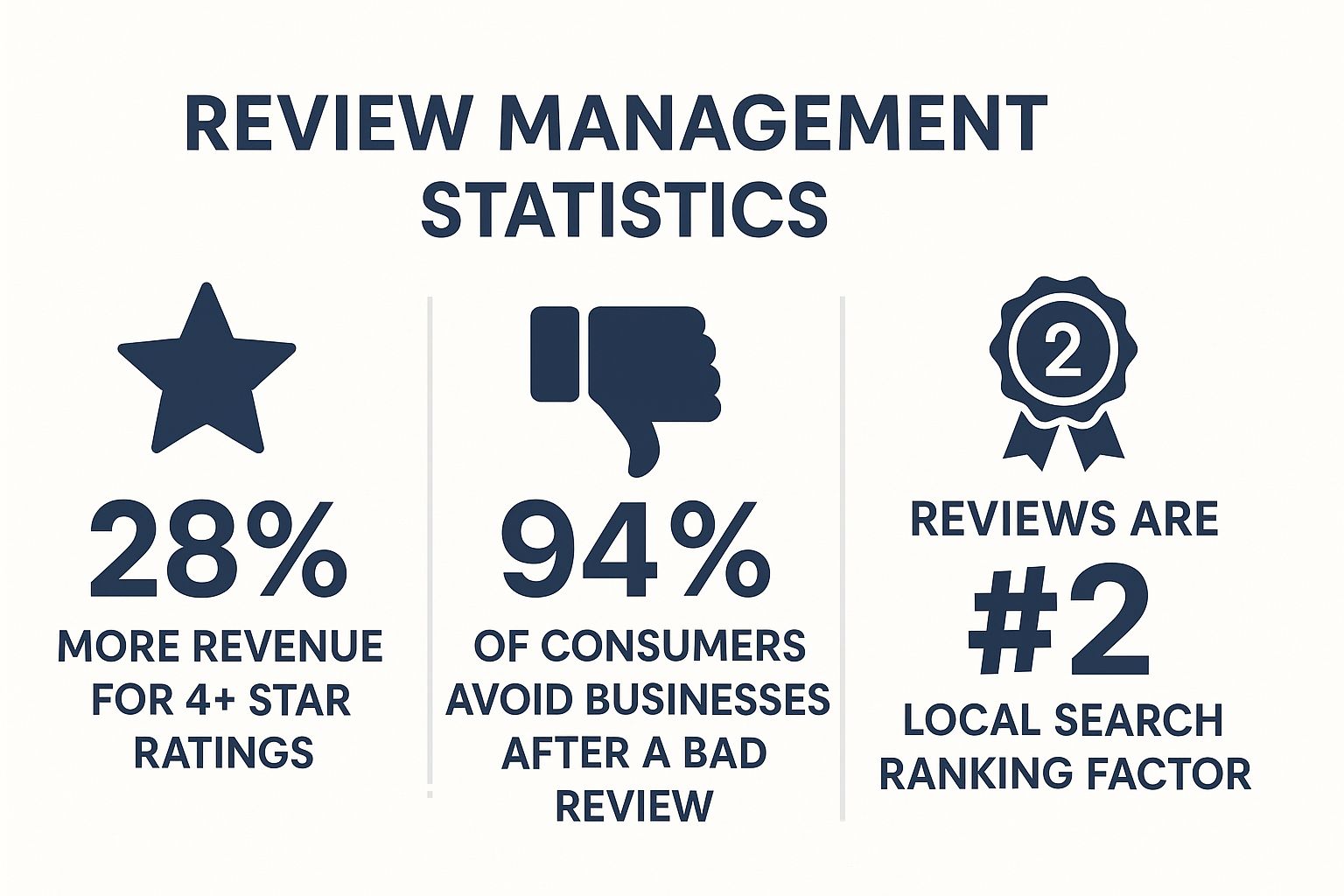
For a local business, your online reputation is a primary driver of revenue and visibility. The data shows just how critical reviews are for both customer perception and search engine performance. These statistics highlight that a strong review profile not only attracts customers but is also a top factor in how Google ranks your business in local search results. A home services company in El Dorado Hills, for example, can see a 300% increase in reviews simply by sending an automated text request after a job is completed, boosting its local authority.
Key Implementation Steps
To build a stellar reputation that drives growth, focus on these actionable steps:
- Systematize the Ask: Don't passively wait for reviews. Ask for them immediately after a positive interaction when the customer is happiest. Train your staff to mention it at checkout or include direct links in follow-up emails.
- Respond to Everyone, Promptly: Make it a policy to respond to all reviews, positive and negative, ideally within 24 hours. A thoughtful response to a negative review can often turn a dissatisfied customer into a loyal one.
- Showcase Your Best Reviews: Feature your top reviews and testimonials prominently on your website's homepage, service pages, and social media feeds. This immediately builds credibility with new visitors.
- Use Management Tools: Leverage software like Podium or Birdeye to centralize monitoring and streamline the process of requesting and responding to reviews across multiple platforms.
5. Email Marketing with Geographic Segmentation
While often viewed as a global tool, email marketing is one of the most effective local business marketing strategies when refined with geographic segmentation. This approach involves building an email list of your customers and then sending them hyper-relevant content based on their specific location. It transforms generic email blasts into personalized conversations that drive local foot traffic and sales.
This strategy is about sending the right message to the right person at the right time. For example, a veterinary clinic with offices in Sacramento and Roseville can send appointment reminders and pet care tips relevant only to clients of each specific location. Similarly, a real estate agent can send hyper-local market updates to homeowners in distinct zip codes, providing immense value and establishing themselves as a neighborhood expert.
Key Implementation Steps
To launch a successful geographically-segmented email campaign, focus on these actionable steps:
- Build Your List Strategically: Collect email addresses at every touchpoint: at the point of sale, through a signup form on your website, and via social media contests. Always offer an incentive, like a 10% discount or exclusive access, to encourage signups.
- Segment Your Audience: From the start, categorize subscribers by location, whether it's by city, zip code, or a specific store branch they frequent. Most email platforms like Mailchimp or Constant Contact make this easy to manage.
- Personalize Your Content: Use location data to customize your messaging. Craft subject lines like "New Taps This Week at our El Dorado Hills Brewery" or "Exclusive Offer for Sacramento Subscribers." This simple change can dramatically increase open rates.
- Maintain Consistency: Send emails on a predictable schedule, such as weekly or bi-weekly. This keeps your business top-of-mind without overwhelming your audience. Always include a clear call-to-action directing them to visit a specific location or contact a local branch.
6. Community Partnerships and Local Sponsorships
Engaging directly with your community is one of the most authentic local business marketing strategies available. Community partnership marketing involves collaborating with other local businesses, organizations, and events to create mutual value, while sponsorships involve providing support to community causes in exchange for brand exposure. This grassroots approach builds goodwill and embeds your business into the fabric of the local culture.

This strategy builds powerful brand affinity by showing customers you care about the same things they do. For example, a car dealership sponsoring the local Folsom high school football team or a gym partnering with a healthy restaurant for a joint "wellness challenge" creates positive associations that advertising alone cannot replicate. It positions your business not just as a service provider, but as a committed community member.
Key Implementation Steps
To effectively leverage community ties, focus on building genuine relationships:
- Choose Aligned Partners: Select sponsorships and partnerships that align with your brand values and target audience. A local law firm sponsoring a Little League team is a classic example of reaching local families.
- Seek Complementary Businesses: Partner with non-competing businesses that share a similar customer base. A coffee shop and a local bookstore could co-host a book club, cross-promoting to each other’s clientele.
- Activate Your Sponsorship: Don't just write a check. Negotiate for logo placement on banners, social media shout-outs, and opportunities to have a presence at events. Document everything with photos for your own marketing channels.
- Join Local Organizations: Actively participate in your local Chamber of Commerce or groups like the Main Street America program to find partnership opportunities and connect with other business owners.
7. Hyperlocal Content Marketing
Hyperlocal content marketing is a strategy that focuses on creating content centered around topics, events, and issues relevant to your immediate geographic area. This approach positions your business as a community expert and valuable local resource, directly appealing to customers searching for localized information and solutions. It's a key part of an effective local business marketing strategies toolkit because it builds trust and improves local SEO simultaneously.
This method goes beyond general blogging. A Folsom-based real estate agent, for instance, could create detailed guides to specific neighborhoods, highlighting local schools, parks, and restaurants. Similarly, a Roseville HVAC company could publish an article on “Preparing Your Home for a Sacramento Valley Summer,” offering region-specific advice. This content provides genuine value to the community, attracting a highly relevant audience.
Key Implementation Steps
To execute a successful hyperlocal content strategy, focus on these actionable steps:
- Create Community-Centric Content: Develop ultimate guides to local events, neighborhoods, or activities. Interview other local business owners or community leaders to build connections and create unique, valuable content that can't be found elsewhere.
- Target Local Keywords: Use tools like Google Keyword Planner to find terms people in your area are searching for, such as "best hiking trails near El Dorado Hills" or "family-friendly activities in Sacramento." Build content around these specific queries.
- Leverage Local Visuals: Always use authentic photos and videos of your area, your team, and your work. Avoid generic stock images to create a more genuine connection with your local audience.
- Promote Locally: Share your content on local social media groups (like Facebook community pages), in your email newsletter, and collaborate with other non-competing local businesses to cross-promote.
8. Local Paid Advertising (PPC and Social Ads)
While organic strategies build long-term value, local paid advertising offers immediate visibility by placing your business directly in front of customers actively searching for your services. This approach uses platforms like Google Ads and Facebook Ads with precise geographic targeting to reach potential customers within a specific city, zip code, or even a few blocks of your location. It’s a powerful method for capturing high-intent leads at the exact moment they need you.
This is one of the most direct local business marketing strategies for driving immediate traffic and leads. For example, an urgent care clinic in El Dorado Hills can run Google Ads that appear only to users searching for "emergency clinic near me" within a five-mile radius. Similarly, a Sacramento furniture store can use Facebook ads to promote a weekend sale exclusively to homeowners in nearby neighborhoods, ensuring their ad spend is highly efficient.
Key Implementation Steps
To launch an effective local paid advertising campaign, concentrate on these steps:
- Start with Hyper-Local Targeting: Set a realistic service or travel radius. Use location extensions in Google Ads to prominently display your address and map pin, making it easier for customers to find you.
- Utilize Call-Focused Campaigns: For service-based businesses like plumbers or electricians, use call-only campaigns or Google Local Services Ads. These generate direct phone calls, connecting you with customers ready to book a service.
- Create Location-Specific Landing Pages: Direct ad traffic to a landing page that mentions the specific city or neighborhood you are targeting. This reassures visitors they are in the right place and improves conversion rates.
- Schedule Ads Strategically: Run your ads during business hours or when you have staff available to answer calls and inquiries. This prevents wasting your budget on clicks that come in when no one can respond. You can learn more about building high-converting local campaigns from experts at WordStream.
9. Customer Loyalty and Referral Programs
One of the most cost-effective local business marketing strategies is to focus on your existing customer base. Customer loyalty and referral programs are designed to do just that, turning one-time buyers into repeat patrons and brand advocates. These systems reward customers for their continued business and for bringing in new clients, directly tapping into the power of word-of-mouth marketing.
These programs are foundational for building a sustainable business. Acquiring a new customer can cost five times more than retaining an existing one. A local Sacramento salon, for example, can offer a $25 credit for each successful referral, transforming happy clients into a powerful, low-cost marketing channel. This not only drives new business but also strengthens the relationship with the current customer, making them feel valued.
Key Implementation Steps
To launch a successful program that drives real growth, focus on these actionable steps:
- Make Enrollment Effortless: The barrier to entry should be nonexistent. Allow customers to sign up with just a phone number or email at the point of sale. Complicated sign-ups will kill momentum before it starts.
- Offer Valuable, Achievable Rewards: The incentive must be compelling enough to change behavior. A coffee shop offering the 10th coffee free is a classic example. Make the first reward easy to attain to demonstrate the program’s value quickly.
- Utilize Digital Tools for Tracking: Modern systems make management simple. Platforms like Square Loyalty or LoyaltyLion integrate with your POS to track purchases and rewards automatically, removing the hassle of physical punch cards.
- Promote the Program Consistently: Your program is only effective if customers know about it. Announce it at checkout, include it in email newsletters, and display signage in-store. For referrals, make it easy for customers to share a unique link or code.
10. Video Marketing and Virtual Tours
Video has become a dominant force in digital marketing, and leveraging it is a crucial local business marketing strategy. This involves more than just commercials; it's about creating engaging content that showcases your products, services, team, and customer stories. For businesses with physical locations, such as a wedding venue or dental practice, virtual tours offer an immersive way for potential customers to experience your space from anywhere.
This approach builds transparency and trust, allowing a customer to "visit" before they commit. For example, a restaurant in Sacramento can use short Instagram videos to showcase daily specials, driving a 30% increase in dinner reservations. Similarly, a real estate agent can use drone footage and virtual tours to reduce unnecessary property viewings by qualifying leads more effectively. The benefits of video marketing are vast, making it an essential tool for local engagement.
Key Implementation Steps
To integrate video effectively into your local marketing, focus on these actionable steps:
- Start Simple and Authentic: You don't need a Hollywood budget. Use your smartphone to create authentic, behind-the-scenes content, tutorials, or testimonials. Consistency is more important than production quality.
- Optimize for Platforms: Keep videos short (30-60 seconds) for social media platforms like Instagram or TikTok. Post videos natively to each platform rather than linking to YouTube for better performance.
- Add Captions and a CTA: Since many users watch videos without sound, always include captions. End every video with a clear call-to-action (CTA), like "Visit us today" or "Book a consultation online."
- Create a Virtual Tour: Use the free Google Street View app to create a 360-degree virtual tour and add it directly to your Google Business Profile. This can significantly increase user engagement and booking consultations.
Local Business Marketing Strategies Comparison
| Strategy | Implementation Complexity 🔄 | Resource Requirements ⚡ | Expected Outcomes 📊 | Ideal Use Cases 💡 | Key Advantages ⭐ |
|---|---|---|---|---|---|
| Google Business Profile Optimization | Low – setup 30-60 mins; ongoing 1-2 hrs/week | Minimal – free tool, some time for updates | Increased local visibility, reputation boost | Small local businesses wanting local search presence | Free usage; builds trust via reviews; direct customer interaction |
| Local SEO and Citation Building | Medium to High – technical SEO, ongoing effort | Moderate to High – tools and expertise needed | Improved organic search rankings, domain authority | Businesses targeting broad local areas, requiring sustainable results | Long-term SEO gains; competitive advantage; NAP consistency |
| Social Media Marketing with Local Focus | Medium – consistent content creation | Moderate – content creation and platform management | Brand awareness, local engagement, foot traffic | Visual/consumer-focused local businesses seeking community connection | Low cost; targeted ads; direct customer engagement |
| Review Management and Reputation Marketing | Medium – constant monitoring needed | Moderate – software tools, time for responses | Increased trust, higher conversion rates, better rankings | Businesses reliant on customer feedback and reputation | Builds credibility; direct influence on buying decisions |
| Email Marketing with Geographic Segmentation | Medium – list building and segmentation | Moderate – email platform, content creation | High ROI, direct communication, personalized offers | Multi-location businesses seeking targeted campaigns | Highly measurable; long-term relationship building; cost-effective |
| Community Partnerships and Local Sponsorships | Medium to High – relationship management | Low to Moderate – financial or in-kind support | Brand visibility, authentic community reputation | Businesses focused on local networking and word-of-mouth | Builds real local connections; cost-effective vs ads |
| Hyperlocal Content Marketing | High – content creation and consistent publishing | Moderate to High – skilled content creators needed | Local authority, improved SEO, community engagement | Businesses aiming for thought leadership and SEO differentiation | Evergreen content; strong local identity; social sharing |
| Local Paid Advertising (PPC & Social Ads) | Medium to High – platform management skills required | Variable – ongoing budget needed | Immediate traffic and visibility; measurable ROI | Businesses needing quick local leads or promotions | Highly targeted; flexible budgets; rapid results |
| Customer Loyalty and Referral Programs | Medium – tracking and ongoing management | Moderate – software and marketing efforts | Increased repeat business, referral growth, higher CLV | Retail and service businesses relying on repeat customers | Cost-effective customer retention; valuable data insights |
| Video Marketing and Virtual Tours | Medium to High – video production and editing | Moderate to High – equipment or hiring professionals | Higher engagement, improved SEO, increased conversions | Businesses benefiting from visual storytelling and facility showcases | Engaging content; builds trust; favored by search engines |
Ignite Your Local Growth: Turning Strategy into Action
Navigating the landscape of local business marketing strategies can feel overwhelming, but the journey to dominating your local market is built one strategic step at a time. We've explored a powerful arsenal of tactics, from the foundational necessity of a meticulously optimized Google Business Profile to the community-building power of local sponsorships and hyperlocal content. Each strategy represents a unique lever you can pull to increase visibility, build trust, and drive real-world traffic to your business.
The common thread weaving through all these approaches is a commitment to authenticity and relevance. Your customers are not just data points; they are your neighbors. Effective marketing means speaking directly to their needs, participating in the conversations they are already having, and becoming a recognized, trusted part of the local fabric. This is where lasting customer relationships are forged.
Your Blueprint for Local Success
The most impactful takeaway is that you don't need to implement all ten strategies overnight. The key is to create a sustainable, integrated plan.
- Start with the Foundation: Prioritize your digital storefront. A complete Google Business Profile, consistent citations, and a strong review management system are non-negotiable first steps. They are the bedrock upon which all other local business marketing strategies are built.
- Engage and Connect: Once your foundation is solid, focus on connection. Use geo-targeted social media, segmented email campaigns, and community partnerships to build a loyal following. These actions transform your business from a simple service provider into an integral community partner.
- Amplify and Scale: With a strong base and engaged audience, you can amplify your reach. Invest in local paid advertising to target specific demographics, launch a customer referral program to turn happy clients into advocates, and use video marketing to showcase your unique value proposition.
From Knowledge to Momentum
Mastering these concepts is not just about boosting your sales for the next quarter; it's about building a resilient, future-proof business. A strong local presence creates a competitive moat that national chains and online-only retailers cannot easily cross. It fosters a level of customer loyalty that transcends price points and fleeting trends.
Every action you take, whether it's responding to a new review or publishing a blog post about a local event, contributes to this momentum. The goal is to create a cycle where your digital presence drives physical traffic, and your real-world service excellence fuels positive online engagement. Start by choosing one or two strategies that align with your current resources and goals, execute them with precision, measure the results, and then build from there. Your local legacy awaits.
Ready to transform these local business marketing strategies from a checklist into a powerful growth engine? The expert team at Site Igniters specializes in crafting and executing custom marketing plans that deliver measurable results for businesses in Sacramento, El Dorado Hills, and beyond. Connect with Site Igniters today and let's build a dominant local presence for your brand.
Seth Sanders is the founder of Site Igniters, a digital marketing agency in El Dorado Hills, California.