
What Are Media Placement Agencies and How Do They Work


Think of a media placement agency as an expert guide for your brand. Their entire job is to strategically get your message seen on the most important platforms—whether that’s a major news website, a popular social media feed, a billboard in a high-traffic area, or even a TV spot.
- Media placement agencies strategically position your brand across news sites, social platforms, and traditional media channels.
- Agency partnerships provide access to media buyer relationships and negotiated rates you cannot get alone.
- Understanding pricing models and contract terms prevents overspending and ensures measurable results.
They are the architects of your brand's public visibility, making sure your story connects with the right audience at the perfect moment. It's like having a real estate agent for your brand, but instead of physical property, they find and secure prime 'media property' where your customers hang out.
Understanding the Landscape of Media Placements
Imagine you’re in the middle of Times Square, trying to get people to hear your message. Just shouting is a waste of time and money. That's where a media placement agency comes in. They're the local expert who knows every shortcut, every influential person, and how to get your message up on the biggest screens for everyone to see.
Their job isn't just about buying ad space. It's about strategically placing your brand's story where it will have the most impact. In today's crowded media world, hiring a specialist isn't a luxury—it's a must-do for any business serious about growth. These agencies already have the relationships, negotiation skills, and data tools to land placements that would take an in-house team months to secure. They cut through all the noise, making sure your investment actually turns into visibility and credibility.

The Three Pillars of Media Property
To really get what these agencies do, you need to understand the different kinds of media 'property' they work with. It all boils down to three main categories. A solid media strategy, which is what these agencies build, uses a mix of all three to create a powerful and unified brand presence.
-
Earned Media: This is the holy grail. It’s the kind of publicity you don't pay for, like a feature article in Forbes, a glowing review from an influencer, or a bunch of positive mentions on social media. It’s called “earned” because you get it through great public relations and a compelling story—exactly what a top-tier agency helps you create and pitch.
-
Paid Media: This is pretty straightforward—it’s any placement you buy. Think social media ads, sponsored articles, TV commercials, and print ads. Paid media gives you control and lets you scale quickly, guaranteeing your message gets in front of a specific audience right away. Agencies are masters at optimizing your ad spend to get the best possible return.
-
Owned Media: This is everything your brand controls directly. We're talking about your website, your blog, your social media accounts, and your email newsletters. You have total control here, but the big challenge is getting people to actually see it. A smart media strategy uses earned and paid placements to drive traffic back to your owned media, creating a flywheel effect that fuels sustainable growth.
The Core Services That Drive Brand Visibility
Media placement agencies are the engines that get a brand noticed. They turn your goals into real-world results by using a whole toolbox of specialized services. These aren't just random tasks; they're carefully connected activities that build momentum and grab your audience's attention everywhere they look.
Think of it as a well-oiled machine where every gear supports the others. Each service solves a specific piece of the visibility puzzle, from finding the right journalists to crafting the perfect story and making sure people actually see it.
Let's unpack the core functions that make top-tier media placement agencies so effective.
Building The Foundation With Media List Curation
Before you can pitch a story, you have to know who you're pitching to. That's where media list curation comes in. This is so much more than just scraping emails from a website; it’s about strategically identifying and vetting the right journalists, bloggers, editors, and influencers who live and breathe your industry.
An agency builds these lists by digging into publications, seeing what reporters have written about in the past, and understanding what makes their audience tick. A solid, well-researched list makes sure a pitch about your new fintech app doesn't end up in the inbox of a food critic. It's this targeted approach that dramatically boosts your odds of getting coverage that actually matters.
The Art Of Strategic Media Outreach
Once the target list is ready, the next step is strategic outreach. This is all about pitching your story in a way that’s compelling and relevant without wasting a journalist's time. A generic email blast is the fastest way to get your message deleted.
Instead, a good agency personalizes every single pitch. They’ll connect the dots for the journalist, showing exactly why this story is a must-read for their specific audience. They might mention a recent article the journalist published or explain how your news ties into a bigger trend they've been covering. It's about building real relationships, not just sending emails.
A great pitch doesn't just ask for a story; it offers one. It solves a problem for the journalist by providing a timely, well-researched, and relevant piece of content that their audience will find genuinely interesting.
This simple shift turns a one-sided request into a partnership where everyone wins. That’s the secret sauce of successful media relations.
Turning Announcements Into News With Press Release Amplification
Got a big announcement? A new product, a huge funding round, or a game-changing new hire? The classic tool for this is the press release. But just writing a press release and throwing it onto a newswire service won't get you very far. The real magic is in the amplification.
Agencies tap into their networks to get that press release directly into the right inboxes. They supplement the broad newswire distribution with direct, personal outreach to their key media contacts. This targeted push ensures your announcement is seen by journalists who are actually likely to write about it.
As a bonus, this kind of coverage often lands you high-authority backlinks, which is fantastic for your search engine marketing efforts.
Core Services of a Media Placement Agency at a Glance
To make sense of it all, here's a quick breakdown of what these agencies do and why it matters for your brand.
| Service | Description | Primary Goal |
|---|---|---|
| Media List Curation | Researching and identifying relevant journalists, influencers, and media outlets. | To ensure pitches are sent to the most appropriate and receptive contacts. |
| Strategic Outreach | Crafting and sending personalized, compelling pitches to media contacts. | To build relationships and secure earned media coverage. |
| Press Release Amplification | Distributing company news and then actively pitching it to key media. | To maximize visibility for major announcements and generate buzz. |
| Paid & Influencer Marketing | Managing sponsored content, native ads, and influencer collaborations. | To gain guaranteed placement and tap into trusted, established audiences. |
These services don't work in a vacuum; they're designed to be a comprehensive system that boosts your brand's visibility from every possible angle.
Navigating Paid Placements and Influencer Marketing
Beyond the stories you earn, many agencies also handle paid placements and influencer marketing. This is where they negotiate things like sponsored content, native advertising, and partnerships with influential voices in your space.
The key here is finding an authentic fit. An agency's job is to find partners whose audience is a perfect match for your brand. This way, the collaboration feels natural and genuine, not like a clunky advertisement. For example, a sustainable fashion brand might team up with an eco-conscious lifestyle influencer for a series of posts.
Today's media placement is all about making smart, informed decisions. This means that using effective data-driven marketing strategies is essential for getting the best results from any campaign.
The Strategic Value of an Agency Partnership
Beyond just getting your name in an article, working with a media placement agency offers a serious strategic advantage. It’s an investment that reshapes how your brand builds authority, frees up your internal team, and helps you cut through the noise of an incredibly crowded media world. The real win isn’t just the final placement; it’s the expert process that gets you there.
Think about it. You could spend months digging for the right media contacts, trying to figure out the subtle art of a good pitch, and making mistakes that could burn bridges before you even get started.
Or, you could plug directly into an agency’s ready-made network of relationships and deep expertise. This instant access is probably the biggest benefit, turning a long, frustrating guessing game into a professional, streamlined operation from day one.
Gaining Instant Access and Expertise
A top-tier agency has spent years—sometimes decades—building real relationships with editors, journalists, bloggers, and producers. They know exactly who to call for a story on new fintech software versus one about a local restaurant opening. This isn't just some generic email list; it's a network built on trust and a history of delivering relevant, newsworthy stories.
Because of that rapport, their pitches actually get opened, read, and seriously considered. For an in-house team to build that from scratch would take hundreds of hours with zero guarantee of success. An agency partnership lets you skip that entire painful learning curve, saving a massive amount of time and letting your team focus on what they do best.
On top of that, the expertise of media placement agencies helps you sidestep common blunders. They know the unwritten rules of media outreach, preventing missteps that could hurt your brand's reputation with key publications.
Building Credibility Through Third-Party Validation
One of the most powerful results of a great media placement is the third-party validation it gives your brand. When a respected publication or influencer features your company, it sends a powerful signal to your audience: you're legit. This isn't an ad you paid for; it's an outside voice saying your brand is worth paying attention to.
A single well-placed feature in a respected outlet can do more for brand authority than months of traditional advertising. It shifts perception, builds trust, and can catapult a brand from obscurity into the mainstream conversation.
This earned credibility creates a ripple effect across your entire business. It gives your sales team a powerful tool, boosts conversion rates on your website, and strengthens your brand's overall value. The initial agency fee becomes an investment in scalable, long-lasting authority. The positive mentions an agency secures can also dramatically improve your company's online reputation, a critical piece of the puzzle we cover in our guide on review management strategies.
A Smart Investment in a Growing Market
The choice to work with an agency also lines up with major market trends. The global market for media buying agencies is on a steady rise, valued at $68.06 billion and expected to hit $69.82 billion. This growth shows that more and more businesses recognize the need for specialized expertise to navigate modern media. Projections show the market will continue to expand, reaching $82.36 billion as companies see a clear return on their investment. You can learn more about the drivers behind media buying agency market growth.
At the end of the day, hiring media placement agencies isn't just about outsourcing a task. It's about bringing on a strategic partner focused on building your brand’s visibility and authority in the most effective way possible.
Understanding Agency Pricing and Contracts
Figuring out the money side of things is a huge part of picking the right media agency. The way you pay an agency isn't just a line item on your budget—it shapes the entire relationship, what they'll do for you, and the results you can expect. Think of it like this: you wouldn't use the same tool for every job, and you shouldn't use the same pricing model for every marketing goal.
Most agencies have a few standard ways they structure their fees. Getting a handle on how each one works, its upsides, and its downsides will help you negotiate a contract that makes sense for your business and sets you up for a win right from the start. Let's break down the common options you'll come across.
Project-Based Fees for Specific Goals
The project-based fee is about as straightforward as it gets. You and the agency agree on a single, fixed price for a very specific job with a clear start and finish line. This is the perfect setup for one-off campaigns that have a single, major objective.
It’s a lot like hiring a contractor to build a deck. You both agree on the scope, the timeline, and the total cost before a single nail is hammered. This model is ideal for things like:
- Product Launches: Getting a big splash of media coverage right when a new product drops.
- Event Promotion: Pushing for sign-ups and building buzz for a conference, webinar, or trade show.
- A Major Announcement: Making sure a big company update, like a new round of funding or an acquisition, gets the attention it deserves.
The biggest plus here is predictability. Your cost is locked in, which makes budgeting a breeze. The downside? It's rigid. If you need something that wasn't in the original agreement, you'll likely have to draw up a new contract or pay extra fees. It’s not great for campaigns that need to adapt on the fly.
Monthly Retainers for Continuous Presence
When you’re looking for steady, long-term media visibility, the monthly retainer is king. With this model, you pay a set fee every month. In return, the agency dedicates an agreed-upon amount of their time and resources to your brand, becoming a true extension of your own team.
A retainer is like having a lawyer on speed dial. You aren't just paying them for one specific case; you're paying for their constant expertise and support. This works best for companies that need a consistent push to build and maintain their brand's momentum. The predictable monthly cost is great for budgeting, and the ongoing relationship lets the agency get to know your brand inside and out, so they can jump on media opportunities as they pop up.
A monthly retainer builds a real strategic partnership. It lets an agency think beyond just ticking off tasks and instead focus on your long-term brand growth, shifting strategy as the market changes or new opportunities appear.
The main thing to consider is the commitment. Retainers usually come with a minimum contract period, often somewhere between three to twelve months, making them a more significant long-term investment.
Performance-Based Models for ROI-Focused Campaigns
With a performance-based model, the agency's pay is tied directly to the results they deliver. Their fee is based on hitting specific, measurable goals, like the number of articles they get published, the authority of the sites they land you on, or even the sales leads generated from the coverage.
This "pay for results" approach is really appealing because it cuts down on the upfront risk. You’re only paying for actual wins, which makes it easy to see the direct return on your marketing spend. The catch? This model can get complicated and might end up costing more if the campaign is a massive success. The contract has to be airtight, clearly spelling out what counts as a "win" to make sure everyone is on the same page and avoid arguments later. It's best for businesses that have very clear, trackable conversion goals.
Comparing Common Media Agency Pricing Models
Choosing a pricing model can feel overwhelming, but it really comes down to matching the structure to your specific needs. This table breaks down the common models to help you figure out which one is the right fit for your business goals and budget.
| Pricing Model | Best For | Pros | Cons |
|---|---|---|---|
| Project-Based | One-off campaigns with clear goals (e.g., product launches, event promotions). | Budget is predictable and fixed upfront. Scope is clearly defined. | Inflexible; changes or extra work often cost more. Less focus on long-term strategy. |
| Monthly Retainer | Businesses needing continuous, long-term brand building and media presence. | Fosters a deep partnership. Agency becomes proactive. Consistent monthly cost. | Requires a longer-term commitment (usually 3-12 months). Can feel costly during slower months. |
| Performance-Based | Campaigns with highly specific, trackable goals (e.g., lead generation, direct sales). | Low upfront risk; you only pay for tangible results. High accountability for the agency. | Can become very expensive if successful. Requires complex contracts to define "success." |
Ultimately, the best model is the one that aligns with your campaign's objectives and your comfort level with risk and commitment. A good agency will walk you through these options and help you find the structure that makes the most sense for a successful partnership.
Getting a big media placement feels fantastic, but how do you prove it actually helped your business? Measuring the real return on investment (ROI) means looking past flashy "vanity metrics" like impressions and digging into the results that actually affect your bottom line.
A solid measurement plan helps you see what’s working, justify your budget, and sharpen your strategy for the next campaign. It turns your media placements from a shot in the dark into a reliable engine for growth. Without clear Key Performance Indicators (KPIs), you're just guessing.
Moving Beyond Simple Impressions
Impressions and reach are okay as a starting point, but they don't tell you much. Knowing 500,000 people might have seen your article is nice, but it doesn't prove anyone cared. That’s why the best media placement agencies zero in on metrics that show real engagement and actual influence.
To get the real story, you have to track how these placements impact your digital presence and business goals. This means watching your website traffic, seeing where leads come from, and even tracking how people are talking about your brand. Each metric is a piece of the ROI puzzle, giving you the full picture of your campaign's value.
Key Performance Indicators That Actually Matter
For a crystal-clear view of your ROI, you need a mix of quantitative and qualitative metrics. These numbers don't just show how many people you reached, but what they did after they saw your placement.
Here are the essential KPIs you should be tracking:
- Referral Traffic: Jump into Google Analytics and see how much traffic each placement is actually sending to your website. A great article on a relevant site should drive curious visitors who stick around, click on other pages, and explore what you have to offer. It's a straight line from the placement to a potential customer on your turf.
- Domain Authority (DA) and Backlinks: When a big-name publication links to your site, it’s like a vote of confidence that search engines love. This "link equity" is a huge SEO booster. Keep an eye on the DA of the sites featuring you—a single backlink from a DA 80+ site can deliver SEO benefits for years to come.
- Lead Generation and Conversions: This is where the rubber really meets the road. Use unique tracking URLs (UTMs) or create dedicated landing pages for your campaigns to see exactly which placements are bringing in leads. How many people who read that article signed up for a demo, downloaded your guide, or pulled out their credit card?
By tracking these concrete numbers, you can draw a direct line from your media outreach to real business growth, proving your investment is paying off.
Analyzing Broader Brand Impact
Not all value shows up as an immediate click or conversion. Media placements also build long-term brand equity, and measuring that requires a slightly different set of tools.
Measuring brand impact is about understanding your position in the market. Gauging Share of Voice and Brand Sentiment reveals how your media efforts are shaping public perception and differentiating you from competitors over time.
For example, Share of Voice (SoV) tracks how often your brand is mentioned compared to your competitors. If your SoV spikes after a campaign, you know you're owning a bigger piece of the conversation in your industry.
At the same time, Brand Sentiment Analysis tools can scan all those mentions and tell you if the chatter is positive, negative, or just neutral. A winning campaign doesn't just get more people talking; it gets them saying good things. This space is also being reshaped by programmatic ad buying, where global spend is expected to hit $152 billion as AI optimizes placements on the fly, which will only amplify brand visibility. You can learn more about the key statistics shaping marketing agencies.
To properly measure the ROI from social media, especially on visual-heavy platforms, you need the right analytics. You can explore tools to analyze Instagram Reels in bulk for agencies to get a much deeper understanding of how your campaigns are really performing.
The Future of Integrated Media Strategy
A media placement used to be the finish line for a campaign. Today? It's the starting gun.
The smartest media placement agencies know that a single piece of coverage is an asset, something to be amplified, repurposed, and woven across every marketing channel you have. This shift in thinking turns a one-time win into a machine that constantly drives brand growth.
The old way was painfully simple: get the placement, report the impression numbers, and call it a day. That approach now leaves a massive amount of value on the table. A feature in a big-name publication isn't just a trophy; it's the launchpad for a coordinated strategy that ties together earned media, SEO, paid ads, and your own content into one powerful system.
From Placement to Perpetual Motion
The real magic happens when you start treating every media win like fuel for the fire. A successful earned media placement isn't just about looking good—it’s a versatile tool that you can use over and over for compounding returns. Every part of the strategy feeds the next, creating a self-sustaining loop of visibility and customer engagement.
This requires agencies to stop thinking like pure PR specialists and start acting like growth architects. The question is no longer just, "How do we get this story placed?" It’s become, "How can this one placement boost our SEO, sharpen our ad targeting, and give us enough content ideas for the next three months?"
The results speak for themselves. Instead of isolated successes, brands start seeing a steady upward climb in authority, traffic, and leads. This is where the industry is heading—transforming singular PR victories into a system of perpetual brand motion.
The Integrated Growth Loop in Action
So, what does this "multi-channel amplification" actually look like? It's about taking that one media placement and squeezing every last drop of value out of it across different platforms.
Here are the key pieces of the puzzle:
- Fueling SEO with Backlinks: A placement on a respected website gives you a high-authority backlink. That’s a massive signal to search engines that your site is credible, which directly helps your organic search rankings climb.
- Creating Hyper-Targeted Ad Audiences: Agencies can take the readership data from a publication and build custom audiences for PPC campaigns. If your product was featured in a tech outlet, you can target ads directly to that outlet’s readers on Facebook or LinkedIn. You're reaching a pre-qualified audience that's already interested.
- Repurposing for Content Marketing: The core message from the placement can be spun into blog posts, social media updates, email newsletters, and even short videos. This gives the original story a much longer shelf life and reinforces your brand's authority on your own channels, especially when you explore the powerful benefits of video marketing.
This chart breaks down how focusing on brand awareness kicks off a process that leads to real business results.
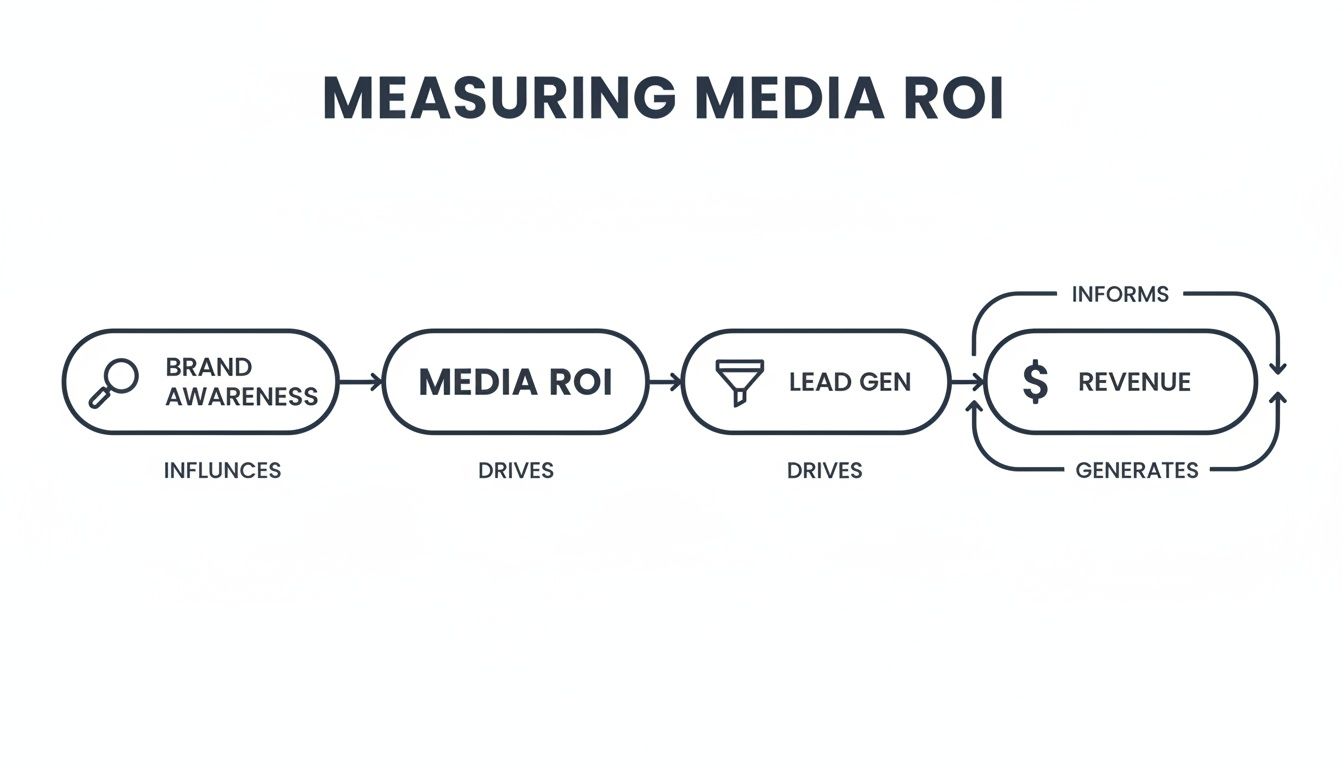
As you can see, strategic media placements are the first domino to fall in a chain reaction that leads straight to more leads and higher revenue.
The Role of AI in Modern Amplification
Artificial intelligence is quickly becoming the engine for this integrated strategy. AI tools can analyze a successful placement and instantly find dozens of similar publications and journalists for the next round of outreach. They can also automate sharing and amplifying the content across social media, getting you maximum visibility with a fraction of the manual work.
AI doesn't replace the human side of media relations; it supercharges it. By handling the data-crunching and repetitive tasks, AI frees up strategists to do what they do best: build relationships and craft stories that connect.
This shift is happening fast. There are now over 179,000 digital agencies worldwide, and the number incorporating AI into their work is growing. Agency services related to AI have already jumped from 10% to 17%, showing just how essential these tools have become for smarter, more efficient media strategies.
Questions We Hear All the Time About Media Placement Agencies
So, you get what these agencies do and why they're a smart move. But what's it really like to work with one day in, day out? Let's tackle the practical, rubber-meets-the-road questions that pop up right before you're ready to team up with an agency.
Think of this as your final gut check. We'll cover everything from how fast you can expect to see your name in lights to who actually owns those hard-won media relationships.
How Long Until I See Results from Media Placements?
This is the big one, and the honest answer is: it depends on the playground. With paid media—think social media ads or sponsored articles—you can see the needle move almost instantly. We're talking traffic, clicks, and eyeballs within hours or days of a campaign going live.
Earned media is a different beast altogether. It's about building real relationships, not just buying ad space. Securing that first major feature can take anywhere from four to twelve weeks. It's a game of momentum. Once you land a few good placements, a snowball effect kicks in, making it easier to get the next "yes" as your brand's credibility grows.
Who Owns the Media Contacts and Relationships?
This is a really important detail to get straight in your contract. In most cases, the relationships an agency builds with journalists, editors, and influencers are their stock-in-trade. They've poured years, sometimes decades, into building that trust and rapport.
When you hire a media placement agency, you're not just paying for their time; you're tapping into their entire network. The real value is their ability to get your story in front of the right person who will actually open the email—a shortcut that could take an in-house team years to build from scratch.
When the contract ends, their contact list stays with them. It’s their intellectual property. Of course, any direct relationships you or your team personally build with journalists during the partnership are yours to keep and nurture.
What Is My Role in the Media Placement Process?
While the agency handles the heavy lifting, your partnership is the key to making it all work. You're not just handing things off; you're an active player. Here's what your role typically looks like:
- Be the Expert: You know your business inside and out. The agency will lean on you for story ideas, company stats, and access to key people for interviews.
- Give the Green Light: You'll always have the final say. Before any outreach starts, you'll review and approve the core messages and story angles the agency has crafted.
- Stay Ready: When a journalist bites, the opportunity can be fleeting. Being quick to respond for an interview or provide a quote is absolutely critical.
It’s a true collaboration. The agency brings the media know-how and the legwork, and you bring the raw material and industry authority that makes a story compelling. The best campaigns happen when both sides are engaged and working together.
Ready to stop hoping for visibility and start making it happen? Site Igniters doesn't just land you placements; we connect them to a full digital strategy including SEO, PPC, and AI-powered amplification that turns media buzz into real business growth. Start your project today.
Seth Sanders is the founder of Site Igniters, a digital marketing agency in El Dorado Hills, California.