
organic traffic vs paid traffic: The Definitive Guide

When you break it down, the difference between organic and paid traffic is pretty simple. Organic traffic is what you earn over time through SEO, building a lasting presence and authority. On the other hand, paid traffic is what you buy for immediate, highly targeted results. The real question isn't which one is better, but which one makes sense for your goals, budget, and timeline right now.
- Organic traffic builds compounding, long-term value while paid traffic delivers immediate, targeted results.
- The best strategy combines both channels, using paid ads for quick wins and SEO for sustainable growth.
- Understanding the ROI timeline for each channel helps you allocate budget more effectively.
Defining the Core Traffic Channels
Before we get into the nitty-gritty, it's important to realize that not all website visitors find you the same way. The organic vs. paid traffic debate is really about how you invest your resources—either your time or your money—to get in front of the right people. The smartest marketing plans don't pick a side; they blend both to create a powerful, resilient engine for growth.
A Quick Look at the Key Differences
Think of organic traffic as the foundation of your digital house. It comes from people who find your site through unpaid search results because you've created content that genuinely helps them or answers their questions. This approach builds trust and credibility, but it takes time.
Paid traffic is more like a turbo boost. By paying for ads on platforms like Google or social media, you can jump to the front of the line and put your message right in front of a specific audience. This generates instant visibility and can bring in leads almost immediately.
Your ultimate goal should be to build a system where paid traffic generates immediate revenue and valuable data, while your organic strategy builds a long-term asset that makes you less dependent on ad spend over time.
Don't just take my word for it—user behavior backs this up. A jaw-dropping 94% of all clicks on Google go to organic results, leaving just 6% for paid ads. This shows a clear preference and trust in the results that aren't sponsored. Even climbing a single spot in the organic rankings can increase your click-through rate by almost 3%, which shows how valuable that SEO effort really is. You can find more details on these organic and paid search statistics.
To make this even clearer, here’s a quick comparison table that lays out the fundamental differences and helps you see where each strategy really shines.
Organic vs Paid Traffic At a Glance
| Attribute | Organic Traffic (SEO) | Paid Traffic (PPC) |
|---|---|---|
| Speed to Results | Slow (Months to years) | Fast (Immediate) |
| Cost Model | Indirect (Content, tools, time) | Direct (Pay-per-click/impression) |
| Longevity | Sustainable, long-lasting | Temporary (Stops when you stop paying) |
| Audience Trust | High | Lower (Users recognize it's an ad) |
| ROI Horizon | Long-term, compounding | Short-term, measurable |
| Targeting | Broad, keyword-based | Granular (Demographics, interests, behavior) |
The Compounding Power of Organic Traffic
Paid traffic can give you a quick win, but organic traffic is how you build a real, sustainable business online. Think of it this way: paid ads are like renting an apartment, while organic traffic is like buying a house. Every piece of content you create and every SEO tweak you make is an investment in a digital asset that grows in value over time.
Unlike a paid campaign that disappears the second you stop funding it, your SEO efforts keep working for you long after the initial push. A single blog post that hits the first page of Google can become a reliable source of leads for months, or even years. This is the compounding effect in action—your online presence gets stronger and more authoritative with every bit of effort.
Building Authority and Trust
One of the biggest wins with organic traffic is the trust it automatically builds. People know the difference between a paid ad and a result that Google genuinely thinks is helpful. When your site shows up organically, it's like getting a stamp of approval from the search engine, signaling that your content is credible and relevant.
This kind of trust isn't easy to get. It's something you earn through consistent, high-quality content that actually solves problems for people, backed by solid search engine optimization (SEO). You can learn more about what it takes by checking out our deep dive into search engine optimization (SEO).
"The true value of SEO isn't just in the traffic it generates, but in the authority it builds. An organic ranking is a vote of confidence from both search engines and users, creating a level of credibility that paid ads simply cannot replicate."
The numbers back this up. Organic search is still the king of web traffic, with over 53% of all website visits coming from organic results. Not only that, but users overwhelmingly prefer these listings—about 70% of clicks go to organic results, while paid ads get just 30%.
The Long-Term ROI of Patience
Of course, the big catch with an organic strategy is time. In the organic traffic vs paid traffic debate, patience is the name of the game. You won't see big results overnight; it often takes months of consistent work to start climbing the rankings and see a real traffic boost.
This delay can be a tough pill to swallow for businesses that need leads right now. But the long-term return on that investment usually blows paid channels out of the water. Your initial cost for content and optimization pays off again and again, steadily lowering your customer acquisition cost over time.
Here are a few key benefits that make it worth the wait:
- Evergreen Asset Creation: A well-written guide can pull in visitors for years, generating leads without you spending another dime on it.
- Brand Credibility: When you consistently show up in top search results, people start to see you as a trusted leader in your field.
- Reduced Dependency on Ad Spend: A strong organic presence gives you a stable traffic baseline, so you're not as vulnerable when ad costs spike or budgets get cut.
- Higher-Quality Leads: Visitors who find you through organic search are often more qualified. They were actively looking for an answer, and your content provided it.
Ultimately, building a powerful organic presence is a strategic play. If you're ready to get serious, you should explore some practical strategies to significantly increase your organic traffic and start building that long-term value.
The Targeted Speed of Paid Traffic
While organic traffic builds that solid, long-term foundation, sometimes you just need results now. This is where paid traffic shines. It offers something incredibly valuable in today's market: speed.
When you need immediate visibility and predictable results, paid channels like pay-per-click (PPC) and social media ads are your go-to. Think of it as the "on-demand" side of the traffic equation—you can turn the flow of visitors on and off like a faucet.
Imagine you're launching a new product. Waiting months for your SEO efforts to bear fruit just isn't realistic. With paid traffic, you can instantly put your offer in front of a hyper-targeted audience. This lets you generate those crucial first sales, get immediate customer feedback, and prove your market position from day one. That instant impact is why paid strategies are a non-negotiable part of modern marketing.
Precision Targeting and Granular Control
One of the biggest draws of paid traffic is the sheer amount of control you have. SEO casts a wide net, but paid platforms let you zero in on your perfect customer with laser-like precision. You can define your audience based on a massive range of factors.
This level of control goes way beyond just who you're targeting. Marketers can manage practically everything:
- Budget: Set daily or lifetime spending caps so you never blow your budget.
- Bidding: Decide exactly what a click or an impression is worth to your business.
- Ad Creative: A/B test different headlines, images, and calls-to-action to see what actually works.
- Scheduling: Run your ads only on the specific days or hours when your customers are most likely to be online and ready to buy.
This isn't a guessing game; it's a data-driven science. You can make adjustments on the fly based on real-time performance, constantly optimizing your campaigns for the best possible return.
Paid traffic is the ultimate tool for rapid iteration. It provides immediate data on what messages, offers, and audiences convert, allowing you to quickly refine your strategy and allocate your budget where it will have the greatest impact.
Navigating the Pay-to-Play Reality
Of course, nothing is free. The biggest drawback to paid traffic is the direct cost. Every single click, impression, and conversion has a price tag attached. The moment you stop paying, the traffic disappears. It's a purely transactional relationship where your visibility is directly tied to your ad spend—a key difference when comparing organic vs paid traffic.
This pay-to-play model demands careful management and a solid understanding of search engine marketing (SEM) to stay profitable. If you're looking to get started, our complete guide to search engine marketing (SEM) is a great place to begin building effective campaigns.
Despite the costs, the results speak for themselves. Well-run paid search ads can boost website traffic by an incredible 53%, and 75% of users say these ads help them find what they need more easily. Even though paid search accounts for a smaller slice of global traffic—about 15%—its strategic value for getting immediate, targeted results is undeniable.
Ultimately, paid traffic is an accelerator. It’s the perfect tool for time-sensitive goals like seasonal promotions, event registrations, or testing out a new landing page. While it won't build the long-term, compounding asset that organic traffic does, its power to deliver the right visitors on demand makes it an essential part of any smart marketing strategy.
Comparing Financial Investment and ROI
Let's clear the air on one of the biggest misconceptions in marketing: the cost of traffic. It's easy to think paid traffic has a clear price tag while organic is somehow "free." Nothing could be further from the truth. Both demand a real investment, but how you spend your money—and the kind of returns you get—are worlds apart.
Paid campaigns are straightforward. You have a budget, you bid on your terms, and you pay for every click or impression you get. Your cost-per-click (CPC) is a direct, predictable expense influenced by things like how competitive your industry is, the keywords you target, and your ad quality score.
Organic traffic, on the other hand, is all about indirect, upfront investment. You aren't paying a platform for each visitor, but you are definitely paying for the resources it takes to earn top rankings. This means shelling out for top-notch content creation, technical SEO know-how, premium keyword research tools, and most importantly, the time it takes to build real authority. SEO isn't free; it's a capital investment in a long-term asset.
Short-Term Gains vs. Long-Term Assets
The most important financial difference comes down to the timeline. Paid traffic is built for speed, delivering an almost immediate, short-term ROI. You can spin up a campaign today and have leads rolling in by tomorrow. This makes it a go-to strategy for businesses that need fast results, want to test out a new product, or need to jump on a seasonal trend. As long as you keep feeding it money, the traffic keeps coming.
Organic traffic is the complete opposite; you're building a compounding asset for the long haul. In the first few months of an SEO campaign, you're almost guaranteed to see a negative ROI. You’re pouring money into content and technical fixes with very little traffic to show for it. But once your pages start to rank, they can bring in qualified traffic and leads for years without you paying a dime for each visitor.
"Think of paid traffic as renting an audience; the moment you stop paying rent, you're out. Organic traffic is like buying property; it requires a significant down payment and ongoing maintenance, but eventually, it becomes an asset that generates value on its own."
This "digital property" actually appreciates over time. A single, well-ranked blog post can become an evergreen lead-generation machine, driving down your customer acquisition costs month after month. The financial model shifts from a constant operational expense (paid ads) to a powerful capital investment (SEO).
Visualizing the Economic Trade-Offs
To really get a feel for the financial side, you have to look at how the return on investment plays out over time. A paid campaign gives you a steady, predictable return that goes up as your budget does. An organic campaign starts slow but can grow exponentially once it gains momentum.
The table below gives you a hypothetical look at the ROI journey for both strategies. It highlights the initial financial burn of SEO versus the quick wins from PPC, and how that picture completely flips over a couple of years. This is the core of the organic traffic vs paid traffic debate: the trade-off between instant results and sustainable, long-term growth.
Hypothetical ROI Comparison Over Time
| Timeframe | Organic Traffic (SEO) ROI Projection | Paid Traffic (PPC) ROI Projection | Key Considerations |
|---|---|---|---|
| First 3 Months | Negative ROI: High initial investment in content, audits, and tools with minimal traffic gains. | Positive ROI: Immediate traffic and leads. ROI is predictable and directly tied to ad spend and conversion rates. | Paid traffic is the clear winner for immediate business needs and market validation. SEO is still in its foundational phase. |
| 6-12 Months | Breakeven to Low Positive ROI: Rankings begin to climb, and organic traffic starts to become a consistent source of leads. | Stable Positive ROI: Consistent returns, but dependent on ongoing budget. Costs may rise due to competition. | The gap narrows. Organic efforts start paying for themselves, reducing dependency on the paid channel for baseline traffic. |
| 24+ Months | High Compounding ROI: Top-ranking content acts as a 24/7 lead source with minimal ongoing cost per visitor. | Stable or Declining ROI: ROI remains steady but can be eroded by rising CPCs and ad fatigue. | Organic traffic becomes the more cost-effective channel, delivering sustainable growth and a significantly lower cost-per-acquisition. |
As you can see, the strategy that makes sense for the first quarter might not be the most profitable one two years down the road. Understanding this timeline is key to making the right investment for your business goals.
When to Use Organic and Paid Strategies
Trying to decide between organic and paid traffic isn't about picking a single "best" option. It's about knowing which tool to pull out of the toolbox for the job at hand. The right strategy always depends on your specific business goal and, just as importantly, your timeline.
A startup desperate for immediate customer feedback has completely different needs than an established brand that's focused on cementing its long-term authority. For instance, if you're in a complex B2B space where trust is everything, an organic-first approach is almost always the right call. But if you’re launching a new e-commerce product and need sales now, paid traffic gives you a speed and precision that SEO just can't deliver overnight.
Ultimately, the choice boils down to a classic trade-off: speed versus sustainability. This decision tree gets right to the financial heart of the matter—are you chasing quick, measurable returns, or are you building a compounding asset for the future?
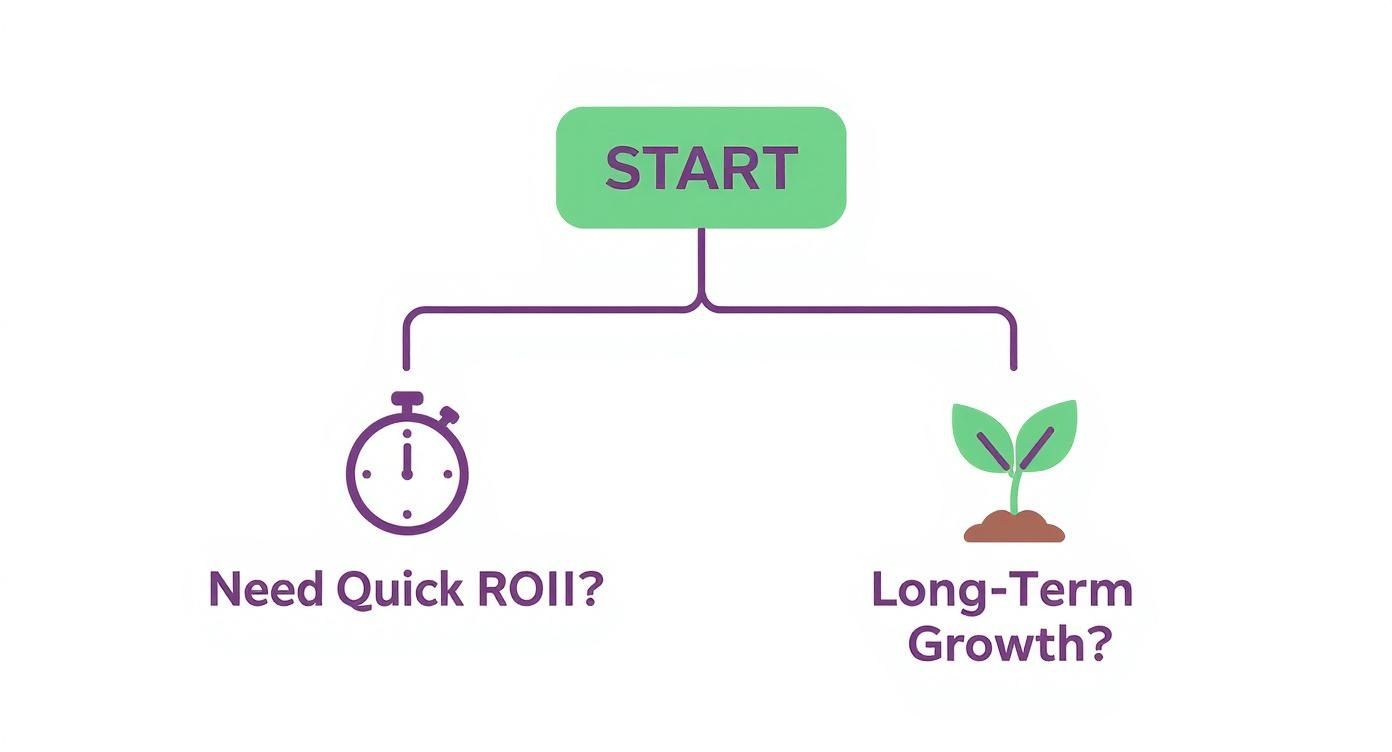
As you can see, your timeline is the biggest factor. Paid traffic wins for immediate needs, but organic traffic delivers far more value over the long haul.
Scenarios Favoring an Organic-First Approach
Think of an organic-first strategy as the foundation for sustainable growth. It's the right move when you're building an authoritative brand and your timeline allows for those gradual, compounding returns to kick in.
Here are a few situations where going organic should be your priority:
- Building Brand Authority and Trust: If you’re a consultancy, a B2B service provider, or in any industry where expertise is your currency, organic content is your best friend. In-depth guides and thought leadership pieces build credibility in a way a paid ad simply can't replicate.
- Creating a Sustainable Lead Engine: For businesses with long sales cycles, a slow and steady stream of inbound leads from search is gold. Content that answers your audience's biggest questions becomes a lead generation machine that works for you 24/7.
- Operating with a Limited Long-Term Budget: SEO definitely requires an upfront investment of time and resources. However, its long-term cost-per-acquisition often blows paid channels out of the water. Once a page starts ranking, it can bring in traffic for years with very little ongoing spend.
The core idea behind an organic-first strategy is simple: you're building an asset. Every piece of content you create is another brick in your digital foundation, making your online presence stronger and more resilient over time.
This approach is all about playing the long game. You're investing in a digital presence that will pay you back for years to come, cutting down your reliance on ad spend and fostering a direct relationship with your audience.
Scenarios Where Paid Traffic Excels
Paid traffic is your accelerator. It delivers speed, precision, and control when time is a luxury you don't have. It's the perfect choice for hitting specific, time-sensitive goals where you absolutely must be visible right away.
These are the use cases where paid strategies are the undisputed winner:
- Launching a New Product or Service: You need immediate feedback and those crucial first sales to prove your concept. Paid ads can push highly targeted traffic to your new product page from day one—something that would take months, if not longer, with SEO.
- Driving Registrations for Events: Promoting a webinar, conference, or a limited-time workshop demands a sense of urgency. Paid campaigns on platforms like LinkedIn or Facebook let you target the exact professional demographic you need to reach within a tight timeframe.
- A/B Testing and Conversion Optimization: Need to know which headline or offer works best? Paid traffic gives you a controlled environment to test different landing pages and messaging. You can quickly gather real data on what converts before you commit to building long-term organic content around the winners.
In the organic traffic vs paid traffic debate, paid channels give you the power to turn on the traffic like a faucet. That level of control is priceless for tactical campaigns that need to deliver measurable results, fast.
Building a Hybrid Strategy for Maximum Growth
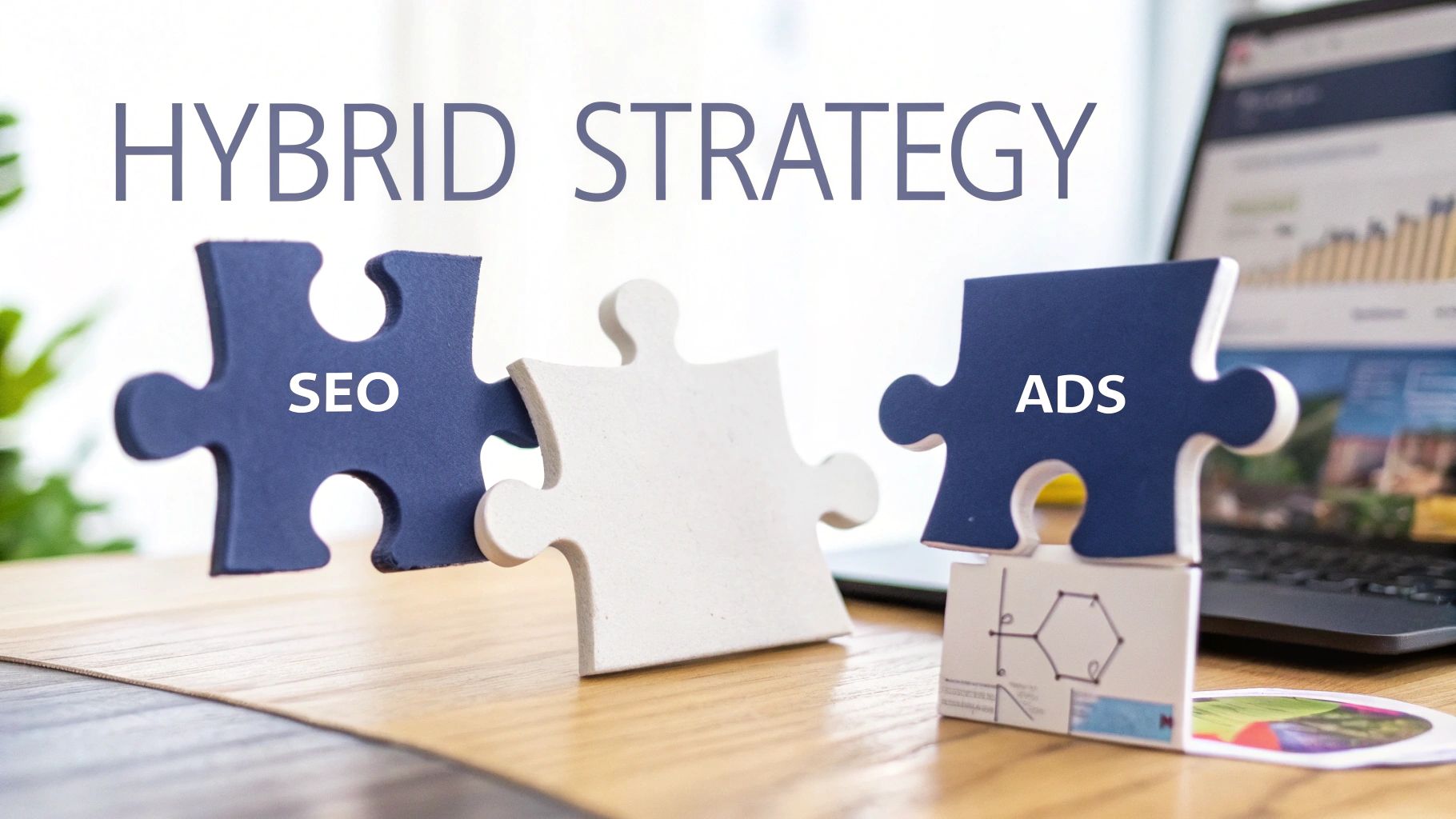
The sharpest marketers I know don't get caught up in the "organic vs. paid" debate. They see it for what it is: a false choice. Real, sustainable growth comes from making these two channels work together.
Think about it. A hybrid strategy creates a powerful feedback loop where the strengths of one channel completely cover the weaknesses of the other. It's not about picking a side; it's about building a smarter marketing engine.
Imagine your paid campaigns as a rapid R&D lab for your entire marketing plan. You get immediate, actionable data on which keywords, headlines, and offers actually get people to click and convert. That intelligence is pure marketing gold.
Instead of guessing what content to create for your long-term SEO strategy, you're using proven insights from your PPC campaigns. If a specific keyword is driving high-quality conversions in Google Ads, you already know it's worth the effort to rank for it organically.
Using Paid Data to Fuel Organic Wins
Your PPC analytics are a goldmine. The search term reports literally show you the exact phrases customers are using to find you, often uncovering long-tail keywords you would've completely missed otherwise.
By targeting these proven search terms with in-depth blog posts, guides, or dedicated landing pages, you can build an organic presence that's almost guaranteed to attract high-intent traffic. This data-driven approach takes the guesswork out of your content strategy and focuses your time and money on topics that have already shown they can make you money.
A hybrid model lets you de-risk your SEO investment. By validating keywords and audience interest with a small paid budget first, you can confidently pour bigger resources into organic content, knowing it’s perfectly aligned with what your market is searching for.
This synergy works both ways, too. As your organic rankings climb, your site's overall authority and Quality Score can improve. The payoff? This can actually lead to lower cost-per-click (CPC) in your paid campaigns. A strong organic presence builds a foundation of trust that makes all your marketing more effective.
Creating a Resilient Marketing Engine
When you integrate your traffic sources, you create a marketing machine that's far more resilient and powerful. You can be agile in the short term and build strength for the long term, all at once.
Here’s how these tactics reinforce each other in the real world:
- Retargeting Organic Visitors: Someone finds your blog through a Google search, reads a great article, and then leaves. With a simple retargeting pixel, you can serve them tailored ads on social media, reminding them of your brand and pulling them right back into your world.
- Amplifying Top Content: Got a blog post with an amazing engagement rate from organic traffic? Don't let that momentum die. Use paid social campaigns to push that proven content to a wider, lookalike audience. You can even consider the 10 powerful benefits video marketing offers and turn your top posts into shareable videos to promote.
- Dominating the SERP: When you have both the #1 organic ranking and a paid ad for the same high-value keyword, you own that search results page. This SERP domination pushes your competitors way down the page and massively increases the chance a user will click on one of your links.
By combining forces, you build a system where paid traffic captures immediate sales while organic traffic cultivates a long-term asset. The end result is a lower blended customer acquisition cost and a clear path to maximum growth.
Common Questions About Organic vs. Paid Traffic
When you're trying to figure out where to put your marketing dollars, a few key questions always pop up. Getting straight answers about organic vs. paid traffic is the first step to building a marketing plan that actually works. Let's tackle some of the most common questions we hear from business owners.
How Long Does SEO Really Take to Work?
This is the big one, and the honest answer is: it’s a long game. Unlike paid ads that can get you on the map overnight, SEO is an investment that builds on itself. You'll usually start seeing some early signs of life—a little more traffic, a few keyword movements—within 3 to 6 months.
But for the results that really move the needle, like ranking for competitive keywords that drive sales, you should plan on a solid 6 to 12 months of consistent work. This means pumping out great content, nailing your technical SEO, and building your site's authority. Of course, this timeline can change based on how competitive your industry is, the current state of your website, and the resources you're putting in.
Which Is Better for a Brand New Business?
If you're starting from scratch with zero online footprint, the smart move is to use both. But if you have to pick one to start with, go with paid traffic.
Paid campaigns give you immediate visibility and, more importantly, immediate data. This is huge for a new business because you can:
- Test your product: Find out right away if people are actually searching for what you’re selling.
- Find winning keywords: See which search terms convert lurkers into buyers.
- Get cash flowing: Start making sales while you build your long-term SEO strategy in the background.
For a new business, paid traffic is your launchpad. It gives you the momentum and market intel you need to make smarter, less risky decisions for your long-term SEO investment.
Do Paid Ads Help Organic Rankings?
This is a common myth we need to bust. Paying for Google Ads has zero direct impact on your organic search rankings. Google keeps a very clear wall between its ad platform and its organic algorithm to keep the search results fair.
But there are some powerful indirect benefits. When people see your ads, they become more aware of your brand. That increased recognition can lead to more people searching for your business by name and visiting your site directly. On top of that, the data you get from your PPC campaigns is pure gold for your SEO strategy. You'll know exactly which keywords are worth targeting because you've already proven they convert.
Ready to build a powerful strategy that combines the best of both worlds? The experts at Site Igniters can create a custom digital marketing plan that drives both immediate results and sustainable long-term growth. Learn more about our services.
Seth Sanders is the founder of Site Igniters, a digital marketing agency in El Dorado Hills, California.